Food and Housing Should Be Free For All!

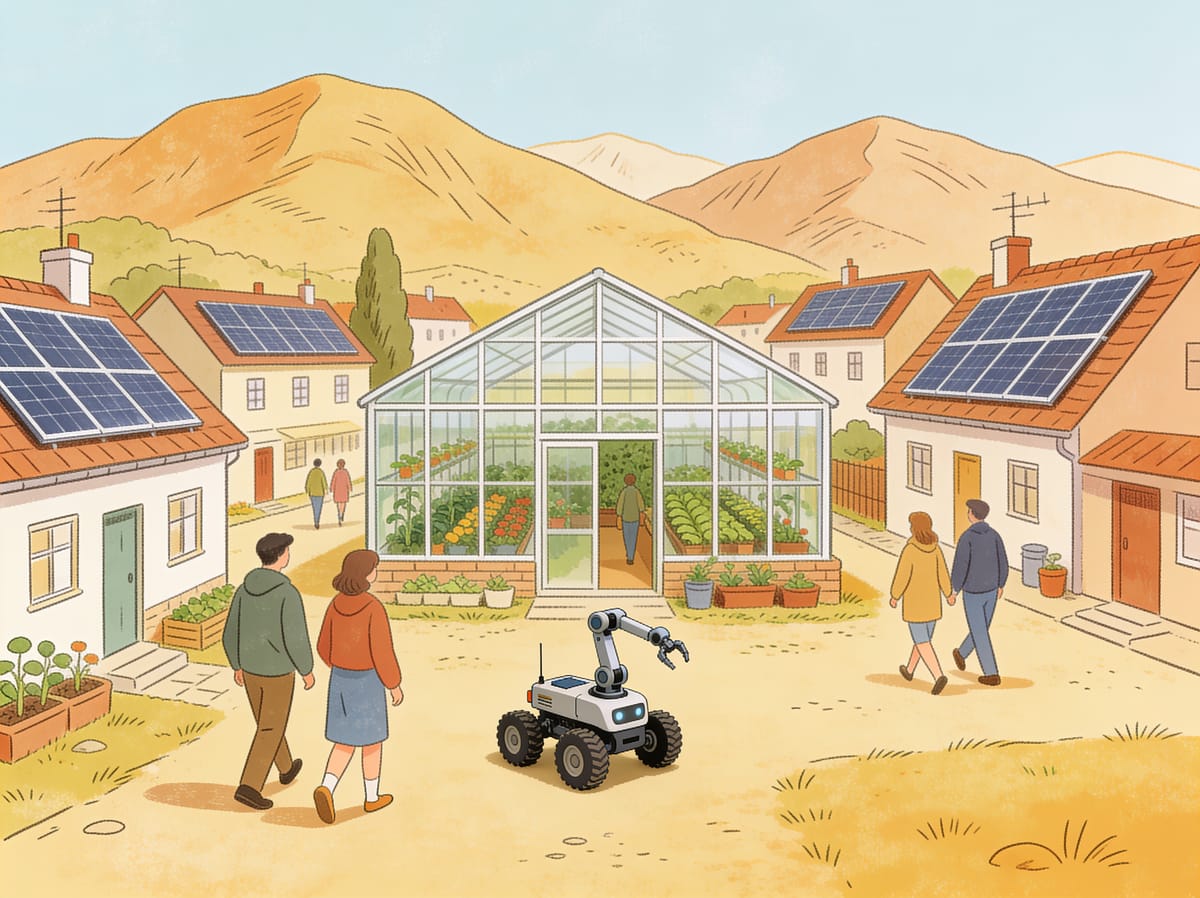
Food and housing should be free for all, and the purpose of this blog is to show that that this can be done. From everything that I have learned over the years I believe that not only is this possible, it is basically a crime against humanity that it is not happening today. The goal of this is not to create a website where I publish a new wordy blog every so often arguing that this can be done and complaining that it's not being done. Rather, most of the entries on this blog will focus on projects that I am doing at home or in my community that are proving this out. Sometimes when I explain this project to people I get the vibe that people think that I am trying to create an innovation to solve this issue for entire cities or countries. They also quickly assume I am trying to create something to sell to people. This project is really closer to an art project than a business venture or anything like that. I am trying to show people what is possible and inspire folks to push harder and think outside the box. I'm also not trying to push people to use my systems or things that I build. Everything done for this project will be open source and available to all. I believe that we can make food and housing free to 10 billion people on Earth. But it will take tremendous creativity, outside the box thinking, empathy, social momentum and hard work to get there. I am hoping that this project might push folks in this direction.
It is important to point out that this momentum has already started. There are many individuals and communities that have already made the transition to live off grid, create and maintain their own organic farms and live a more sustainable life closer to nature. While I really applaud and highly respect the people that have taken this step I also think that despite the fact that they are doing this. Most of the world is still trucking along with the status quo which includes completely jacking the planet up. I feel like this situation represents a bit of a dichotomy. Either you're off-grid living a super simple life with your hands in the dirt or you're living the current, mainstream, consumptive lifestyle. There seems to be very little in-between. I think we need to innovate and update our agricultural systems to get billions of people to move to a middle ground closer to the off-grid folk and organic farmers if we're going to truly start living more sustainably on this planet.
I'm trying to show that it's possible to create your food locally without fossil fuels and with automation and close looped organic ecosystems thus eliminating most of, if not the entire cost of food. Not only is this important for reaching the folks that don't really pay attention to environmental issues, it is also critical for environmental and sustainability reasons. To be able to do this a key feature is required. Ultra high capacity. We cannot feed entire cities from within cities if we simply cover all of the sidewalks and backyards with planter boxes. If we're going to feed people in cities from within the cities we have to people to grow 100x the amount of food that one planter box produces, per planter box. As mentioned this is a project centered blog, so let me introduce what those projects are. They include but are not limited to the following.
- Building a mechanical and automated vertical greenhouse. The greenhouse should support hundreds of square feet of vertical grow space in a 25 square foot area. However, this same design should be infinitely scalable by stacking these units together.
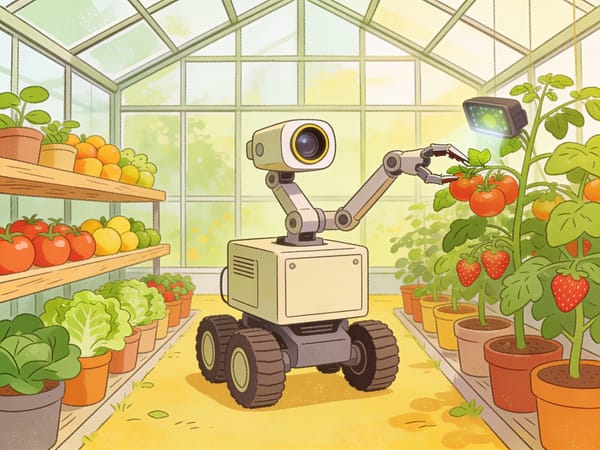
- Building and programming a robot to "manage" the greenhouse. You can see a more detailed explanation of the tomauto1 robot and view the source code for it here.
- Develop a system for irrigating the vertical greenhouse with aquaponics. I will use the fish tank to also provide fertilizer to the plants, vegetables and flowers that grow in my yard so that I can eliminate store bought fertilizer.
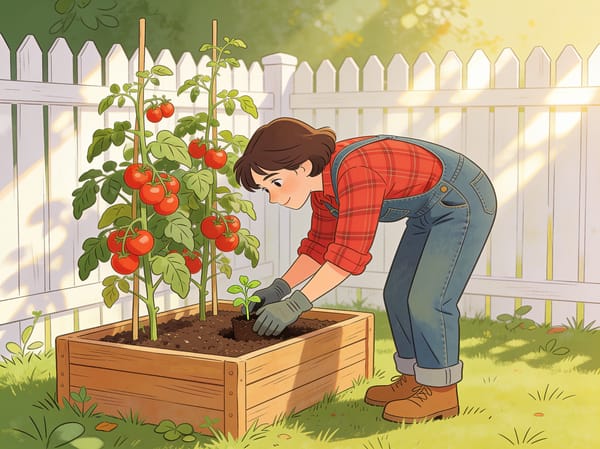
- I will also document and build a basic planter box. While I don't think planter boxes in themselves are going to save the world, I want to put this up here, because it's a very basic project that can be done in a weekend, and I think everybody should have a planter box with their own vegetables, if they have the space for it.
- Develop a strategy for composting at home. Same idea as number 4. Not going to save the world, but everybody should do this. I am going to document my process for creating compost material and working it into my planter box. Part of this will be to experiment with using my dog's poop in the compost. However I want to make sure I do it in the correct way so the fertilizer is safe. I will be sampling and testing this compost to make sure it is healthy, safe and free from parasites and harmful bacteria as well as measure the nutrient levels that have been added to it. I will only use it for the plants and flowers that wont be eaten in the beginning. If I get comfortable with the safety of it, then I will start adding it to my fruits and vegetables. And of course all will be documented on this blog.
- Setup a solar/wind power generation system. This is going to serve the automated greenhouse. The goal is to run the entire greenhouse, irrigation system and robot off power from these power sources. Please see the number 10 stretch goal for a variation on this.
- Stretch goal: Build a small wikihouse.
- Stretch goal: Build a miniaturized Earth Power Lodge such as what is seen on the documentary The Need to Grow. This is a real stretch goal. I probably wont seriously take this on unless I can get some help from somebody. Also it is worth noting if I thought this were possible and would be really effective with the time that I have and my resources I probably would tackle this first even before my robotic vertical greenhouse. I did reach out to the folks in this documentary and while they were not amazing helpful, they did give me a document that was a feasibility study of one of their earth power lodges and I read it carefully. I came to the conclusion that I think they were exaggerating the power output of these things in their documentary. I don't think the bio char output was exaggerated, but I don't think it is actually taking carbon negative like I had understood. I think it's probably carbon neutral. So yeah my overall conclusion is that those EPLs talked about on Need To Grow are interesting, but they're too expensive and dependent on fossil fuel supply chains to make a significant dent in sustainable living. That being said, if we organized our whole economy around those and creating small communities around them it could be a serious stepping stone towards a more sustainable future, but I just don't see the governments are really going to support that, and large EPLS are just too big and expensive for what they do for communities to really implement them with their own resources. One of my other thoughts though too. And I don't assert this with a great deal of confidence. But I wonder if the scale of them in the documentary was not optimal. It might be possible to build a much smaller and cheaper one that is part of a sustainable system that communities create that gives more bang for its buck. If you could at least decouple the construction of those from global supply chains, then maybe that is more of valid solution. Anyways all that being said, I might try and create a mini one at some point.
- Stretch goal: Setup a pollinator plant grow and donation operation. I'm putting this under stretch goals for now. But I almost certainly will start this spring 2027. The purpose will be to grow a lot of pollinator starters and just walk around my neighborhood and give them to people. I will create a blog entry and document my experience with this.
- Stretch goal: While I didn't put this in one of the main goals. I also think power should be free to all. I also think that one of the reasons why we seem to think that all humans need a super high powered life is to keep up with the jones and to particpate in the modern consumptive economy. It is my personal opinion that humanity does not need a 1000 watt house about 98% of the time. While you might need to sacrifice your stove top and maybe your dryer, besides those things, you can really get by on about 95% of what you need with a 300 watt system. Keep in mind, you get to keep your most prized machine the washing machine with those numbers. Washing machines are the most important and underrated gadget that people use on a daily basis. If you don't believe me, try hand washing your clothes by hand for a few months. I promise, after that experience, you'll wonder why Meta, Amazon, Nvidia, Apple and the other companies are worth 5 trillion dollars but Whirlpool is nowhere close. Your washing machine is more important to your way of life than any of those trillion dollar companies' products. Just another example of how valuation in the stock market does not associate well with value for humanity. With all that in mind. I want to try to create a sterling engine that uses hot air produced from a solar array that can be used to generate electricity. The result should be a DIY solar power system that anybody can build with parts from Home Depot. Way more sustainable than solar panels but on the downside less performant. I am going to explore this while I do step6. Theoretically it seems possible to generate the kind of power I need for my greenhouse/robot with the setup I have in mind, but it's a lot harder to implement because it's a custom built power generator. Why build my own? From what I can tell there is no middle of the road sterling engine power generators. There are simple toy ones that are not powerful enough to do what I need to do, and there are industrial grade ones that weight half a ton or more and costs hundreds of thousands of dollars and are usually using helium and other gases and techniques that are not super sustainable which is not a good fit for this project. Therefore because I need a sustainable and therefore a custom one, I put this as a stretch goal because I'm not sure if I can do this. But I will try.
- Stretch goal: Create an insect monitoring and soil monitoring system with data visualizations for my planter box. I've been reading a lot about flowers and bees lately and I keep reading stuff like "This flower is great for this kind of bee" or "If you do this, it'll make your soil better" and I keep wondering. How great? How much better? I'd like to quantify that and display my results on a website somewhere.
- Stretch goal: Create a web platform that is specifically for content creators to create courses on sustainable living topics. The courses should be demonstrations of how to do something. I'd like to do it very much like udemy.com but specifically for sustainable living.
- Stretch goal: Develop and document a process for creating bio-diesel at home.
- Stretch goal: Develop an admin dashboard for the robotic systems so that farmers can manage their robots and their farms from their couch.
- Stretch goal: Build my own Brushed DC motor from scratch and set it up as a wind turbine power generator. A true DIY wind power generator from scratch.
- Stretch goal: Develop a software platform that helps city planners design the infrastructure and supply chains required for self reliant, organic, food production systems operating in large urban areas.
OK, that was a lot. Probably too much to do in one lifetime and there were more stretch goals than real goals. I am very committed to goals 1-6 and I expect to have them mostly done by the end of 2027, but the others are mostly just dream projects to do if I had enough time and resources, but I will at least start and complete some of the stretch goals, but I'm just less sure about which ones and when.
But why am I doing this? As mentioned above I've had a huge urge in the last year to do what I can to help steer humanity in the right direction. I won't get into all of the reasons that make me think humanity is going in the wrong direction at the moment but a couple that are more relevant for this project are as follows. One of the more benign reasons is due to the fact that we have lost a lot of extremely important but basic skills that communities use to have, for example skills such as building a home, managing a farm, creating power infrastructure are very important skills but few people really have them today. We've outsourced all this skill that communities used to have, to companies. In the process we've gone on to do "more important work" by working for billionaires to meet their bottom line and society has been effected with a sort of brain drain in this area. I want to correct this for myself. Another reason and probably the more significant reason is due to the following observation: Our current way of government and economy doesn't work. We need a new economy and it's going to have to be sustainable, peaceful and environmentally friendly, and we just are no where near that with our current way of living. I truly believe that solving free food and housing in a smart way would be a a huge step towards diverting humanity away from major crises such as environmental and economic collapse.
OK, Here is the part where I start complaining and venting, but I assure you this is the only place on the blog where you'll see these types of ideas and messages. In a little more depth I'll explain briefly why I think our modern way of living doesn't work today and probably never has. Be warned, I'm biased, I don't care and I'm not looking for a debate to become more enlightened by a smarter person. I just want to engage in GreenHackery.
- Aside from a few exceptions, big government mostly exists to control people. People are like herds of cattle for billionaires but they get the government to be the shepherd . It's a perfect way to have an ultra elite class that everybody works for, but distant enough that when the people get unhappy the people who are actually in control (the billionaires) don't get blamed. Whether you live in a capitalist, socialist or communist country, really at the end of the day the government is there to control you on behalf of the billionaires and there is not much motivation for them to facilitate true freedom. Because your dependence and obedience equals their extraordinary wealth.
- The modern economy is so stupid it is mind boggling. Most of the jobs in the modern economy are either solving problems that exist because of a corrupt or inefficient system, are enabling a scam or facilitating the scammers. Most of the important jobs are given no respect whatsoever. The people that are "highly respected" and hold the jobs that we are all told to aspire to make a solid 6,7,8 figures involve basically just sitting in meetings and on zoom calls to figure out how to hurt other people by either exploiting people or laying them off. It's terrible. There is little incentive or effort to solve the real problems humans face and in the wake of this economy is violence, war, genocide and ecocide.
- War is a requirement for participating in the global economy. Wars are fought in the interests of the economic pillars of society which associate strongly with the billionaires and the elites of the world. Aside from the certain horror that war brings, it is a short term economic solution at best for the country waging the war. Mobilizing the military is always justified as self defense, but in the case of the USA it rarely actually is, at least since WWII. So why do we do it then? Simply put, the use of the military by the USA is the market corrector. When the market is not behaving in a way that pleases the billionaires, the military jumps in to solve this. However the framing of it to the citizens is always in terms of a national security threat so the people can sleep well at night knowing their government is the good one. But really, the USA government doesn't give a shit about its own civilians dying in so far as it doesn't contribute to its own demise. A stat that illustrates this is the fact that almost 20X as many people die every year because they don't have healthcare as the amount of American civilians died on 9/11. Think about that. If the United States government cared for its people a lot more attention would be paid to providing healthcare for people rather than invading countries. This requirement for war, has led advanced countries like the USA, Russia, China etc to invest so heavily in R&D to do war, that we now have weapons that could wipe billions of people off the planet if they were ever used. This is madness, and until we have an economy that doesn't require growth for our economy to work, the market corrector will be in full force.
- The environment is getting trashed by everybody regardless if it is capitalism, socialism or communism. I think I would argue that the "need" to have a military is the entry point for this but it is also sustained by the role of profit in financial systems. Trashing the environment seems to be a requirement for our current system to function. But when you examine it, in the context of what humans need to live happy, healthy free lives most of the trashing of the environment is to sustain inefficient, unnecessary and even violence based systems. The kicker to it all is that some of these systems while we depend on them are also systems of control imprisoning us and tricking us to think we think we have freedom. We have the freedom to choose to work in an authoritarian system (for corporations) or be homeless and starving. You do have the freedom to make that choice, but I would not call that freedom. The folks that assert that this is freedom also lead us to believe that humanity has had tremendous progress, all the while billions of people work very hard to simply keep a roof over their head and food on the table while polluting the world like crazy to do so. Keep in mind, people have always had to work to put a roof over their head and food on the table, the difference between 1000s of years ago and today is that today the 90% of the people that go paycheck to paycheck to do this are not collectively moving us towards a species suicide to accomplish the same goals. All of our systems that are sustaining humanity are serving billionaires at the end of the day and not serving what is in the interest of life on earth and to do what humanity has always needed, to put food on the table and a roof overhead without war and without causing catastrophic ecosystem collapse. These systems and our culture are preventing humanity from entering a golden age. We can live sustainably, peacefully, and with more freedom and better health, but we need to rethink and update some of the systems to do this. Starting with food and housing is the best place to start.
- Lastly, I have come to believe that it is very wasteful and inefficient to have centralized systems that provide everything that they provide today. A better world would be far more open source innovations that can be built by individuals and a better enablement of small communities to control their own destiny and support neighboring communities. Our product design should focus more on simplicity, repair ability and sustainability. Im not saying there is no room for big government, but food, power, water and housing should be handled by individuals and communities and whatever else they want to handle themselves. Buying a pint of strawberries that was grown a thousand miles away or a t-shirt that was made 5000 miles away is incredibly stupid and wasteful. We don't need that. If we correct those basic things it would be a really good start to a sustainable future.
Given these problems and if left unchecked, humanity is in for a very rude awakening. I say humanity because all humans will be effected despite the fact that a small number of countries and people are responsible for the big mess we're in. Whether it's nuclear war or environmental degradation that gets so bad humans can't survive on earth anymore, humans are toast unless we change something. I also don't think it's as much doom and gloom as many social and environmental activists and intellectuals would have you believe. The path to a brighter future for humanity where everybody has better health, a quality home, more free time, an affordable way of life and all in better equilibrium with the environment is a lot easier to achieve than many think. The problem is not our technology or not enough finite resources. The problem is us, it is our culture that's preventing us from getting where we need to go. If we can all get on the same page and decide that we want to live in a different way, we can make it happen quite quickly. The other good news is that ecosystems are extraordinarily resilient, earth will jump back to a healthy state quite quickly if we stop damaging her and give her a moment to breath properly. I firmly believe all of this. However, A collapse of the global economy coupled with catastrophic ecosystem collapse is likely to happen at some point if we don't make significant change. The longer we wait, the more painful the transition (or collapse) will be.
Because this is a solutions oriented blog, free food is going to be the primary focus. While I would love to cover free housing, it's a bit unfeasible which I'll get to shortly. One of the interesting things about tackling the food problem, is that it provides an opportunity to address so many other problems. This is really important to keep in mind. Tackling how we produce the food we eat is about so much more than making a bag of groceries free. However to do this we need to be SMART about how we create the next generation food production systems. For example with an optimal food production system, we can drastically reduce global green house gas emissions. We can also develop systems that are completely organic, no pesticides or herbicides. We can remove the international dependence we have to grow our own food so that localized communities are self sufficient in feeding themselves. We can also address the plastic pollution problem. We can separate our food production systems from the environment by moving them indoors and making our entire food security infrastructure more resilient in the face of climate change. We can create an economic buffer for people so they never have to spend money on something that is infinite and earth provides for free. We can update the systems so they use between 1 and 10% of the water that traditional farms use. So as you can see, we can do a lot by updating this system and it is not just about free food. It's also about saving the environment and bringing actual freedom to people.
However, what do I mean by free food? I need to clarify. Only certain kinds of food are feasible to be free. Getting pizza delivered will probably never be free, a pint of ice cream at the grocery store will probably never be free. You can't make these free because too many human inputs are involved which would require them to be paid. To make those items free would require subsidies or redistribution of wealth.This aspect raises an important issue. While I don't disagree with the ideas of redistribution of wealth, I think it is not logically the best way forward to bring the cost of food and housing down. The reason I say this is complicated and deserves a whole blog or book for itself, but really it boils down to its in feasibility politically and environmentally. Redistribution of wealth only works if you have a government that is not capable of corruption and serving only the interests of billionaires. The reason for this is that politicians come and go (in democracies) and eventually you'll get corruption in there which will revert whatever progress you made there. It's also not a good idea in terms of environmental sustainability. Shipping a pint of strawberries 1000s of miles away to be sold for 5$ is ridiculously inefficient and terrible for the environment. Even if you had a government that was not capable of corruption and the accepted solution was redistribution, you would never address that fundamental environmental problem. So again, redistribution is not a good idea for pursuing free food and free housing. We can and we must do it without redistribution from billionaires. The power is with the people, it always is. We need to recognize this and move forward together. Maybe some day we'll get to free pizza and ice cream but let's not hold our breath. As a first step, the distinguishing factor between what food should and should not be free really comes down to the degree that its production can be be automated. It's important to keep in mind that automation of food production is not just about the technology that humans create but also what nature already does. Nature provides the mechanisms of photosynthesis, transpiration, osmosis, nutrient absorption and many others that contribute to life and the production of resources. So when we think about automation, we need to consider those processes as well. The result should be technology meeting nature to sustain it and provide for humanity.
All that being said anything that can be grown, picked, and put right into your mouth can and should be free. I mean it was like this for the Native Americans and other indigenous people for 1000s of years so why are we charging people money for these things today? Doesn't sound like progress to me. That's another way to look at what food should be free though. The things that were free for indigenous people should be free for people today. Some examples of these foods include leafy greens, berries, potatoes, grains or anything else you can grow. Basically most real food can and should be free. It's also important to consider that the quantity of food that native peoples ate on a daily basis are also probably the quantities of food that should be free. You'll never be able to go to the store and pick up 4lbs of steak every day for a week and expect it to be free. Sure, you should still be able to acquire that if you want, but you'll have to pay for it and it should probably cost you a lot more than what that costs today. Leafy greens, vegetables, fruits and grains should make up the bulk of the human diet, and this is what the free food will mostly if not entirely comprise of.
What's really amazing is, that the amount of work to make 1 plant grow to the point of producing food is remarkably little on the part of the human. It's really amazing when you you start growing your own food. The most important thing that we need, is so incredibly complex, yet so easy to produce. However the trick, obviously, is making enough food for everybody year around which is where it gets tricky. The trouble here is scaling. But I think with some clever engineering we can make simple systems that completely automate the entire life-cycle of any fruit or vegetable in an organic, sustainable and environmentally friendly way and do so at the scale so that we can feed large populations in rural or urban areas. Some crops may be more difficult than others to create systems for this but many of the basics, leafy greens, berries, tomatoes, beans and really much if not most of what you find in the produce section at the grocery store can be completely automated with simple mechanical and robotic systems coupled with natural processes.
As mentioned above I am also very interested in free housing. I think this is a critical feature of a new world and while I would love to really explore that on this blog, the requirements as I see them are much more complex than everything else described above. The main reason for this is while the standards of food for people haven't really changed in 1000s of years, what we consider a quality home really has. In addition to it being technically more complex to create suitable homes for people it is also much more expensive to implement. As of this writing, I do have a basic idea of how this could work but I estimate that I would need at least 5 million dollars and probably more just to pay for the infrastructure and land required. This is too much for 1 person of my economic standing and without a business plan to generate profits there is no hope for investment. It is also worth mentioning that there are already some organizations that are doing the work that would be required for a free housing system in the way that I envision it. Checkout wikihouse to see what some folks are doing to create automated and modular construction systems for building homes sustainably. How these folks are manufacturing homes is the future for providing affordable homes to everybody on earth. The only thing that is really missing from wikihouse to truly create a free housing platform is to integrate that with a sustainable and robust supply chain of raw renewable materials, factories to process the materials and logistics network for distribution of the materials. I hope that if my free food system gets some popularity it will draw attention to free housing. With more attention to it and more people on board, maybe we can then accumulate the resources required to tackle this. But until that time unfortunately I just won't be able to really dive deep into it, but please checkout wikihouse, because they are already making progress in this area.
As discussed, the focus of this website is through projects, explore the design, construction and function of sustainable communities and other GreenHackery with a special focus on developing free food systems. The goal is to create a completely open source documentation of these systems so others can build them themselves by copying what's here or just be inspired to realize that we really do have incredible tools at our fingertips and we can change the world over night if we want to. Hopefully some interested folks take these designs further and build off them or even decide they can do something way better by starting over from scratch. If you're one of these people, please create a website or contact me so I can take a look and learn from you 😄.
Anyways, this a short summary of what is in store for this website. If you decide to check back from time to time, I hope you enjoy. I have disabled the social media aspect of this website, so there is no commenting. If you want to send me a question or comment you can email me. Please include in the email subject "greenhackery" or I may not receive it.

Thank you!